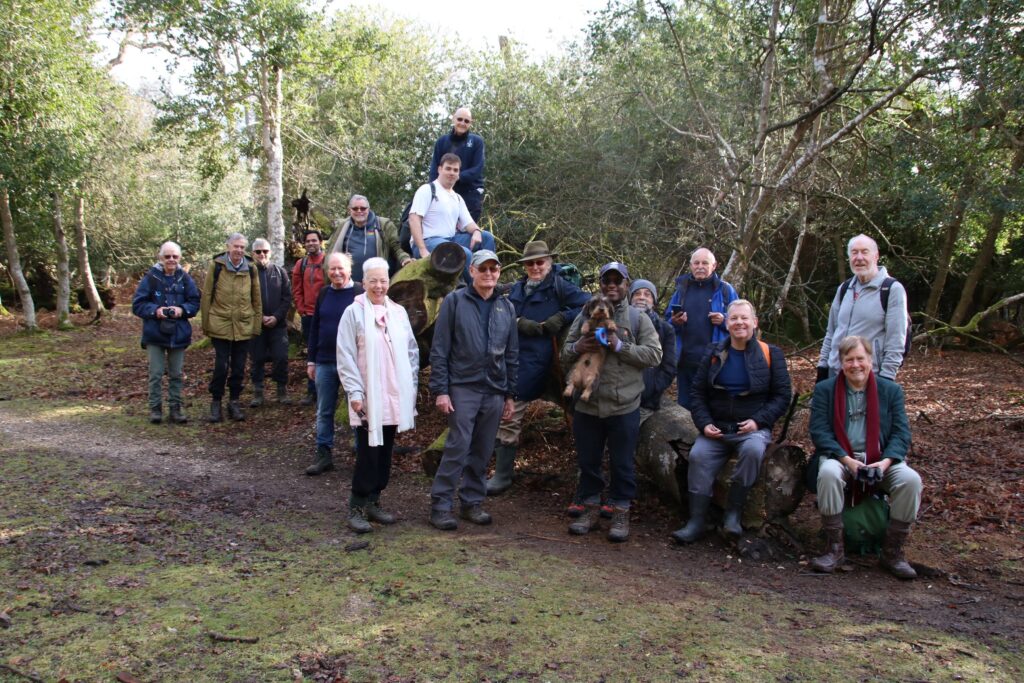

The 1st walk of the Bedfordshire GOC took place on 15 Aug 2026. The walk was advertised a historical walk because what took place here over the past 1,000 years. A 10.5 mil walk through the village of Tempsford at the eastern end of Bedfordshire. A village that straddles both sides of the A1. 7 miles east of Bedford A village and the surrounding area is full of history. The village was divided in two parts in 1960 which the opened with the opening of the A1 dual carriageway.
The origins of the village that has history dating back to the Saxon times. In 917 Tempsford was a fortified Danish burh where, following an unsuccessful attack on Bedford, the Battle of Tempsford took place. The Danes were defeated by an English army led by King Edward the Elder.
A burh was a fortified town or settlement built by the Anglo-Saxons in early medieval England. King Alfred the Great and his successors created these strongholds in the 9th and 10th centuries to defend local people against Viking invasions. Over time, the word evolved into the modern English term "borough"
Tempsford has had a multitude of name variations over the years. The village was known as Tamiseforde in the Domesday Book of 1086. The meaning is disputed. Some historians surmise that this stretch of the Ouse was once known as the Thames, while others believe it to mean the 'ford on the road to the Thames' (in London).
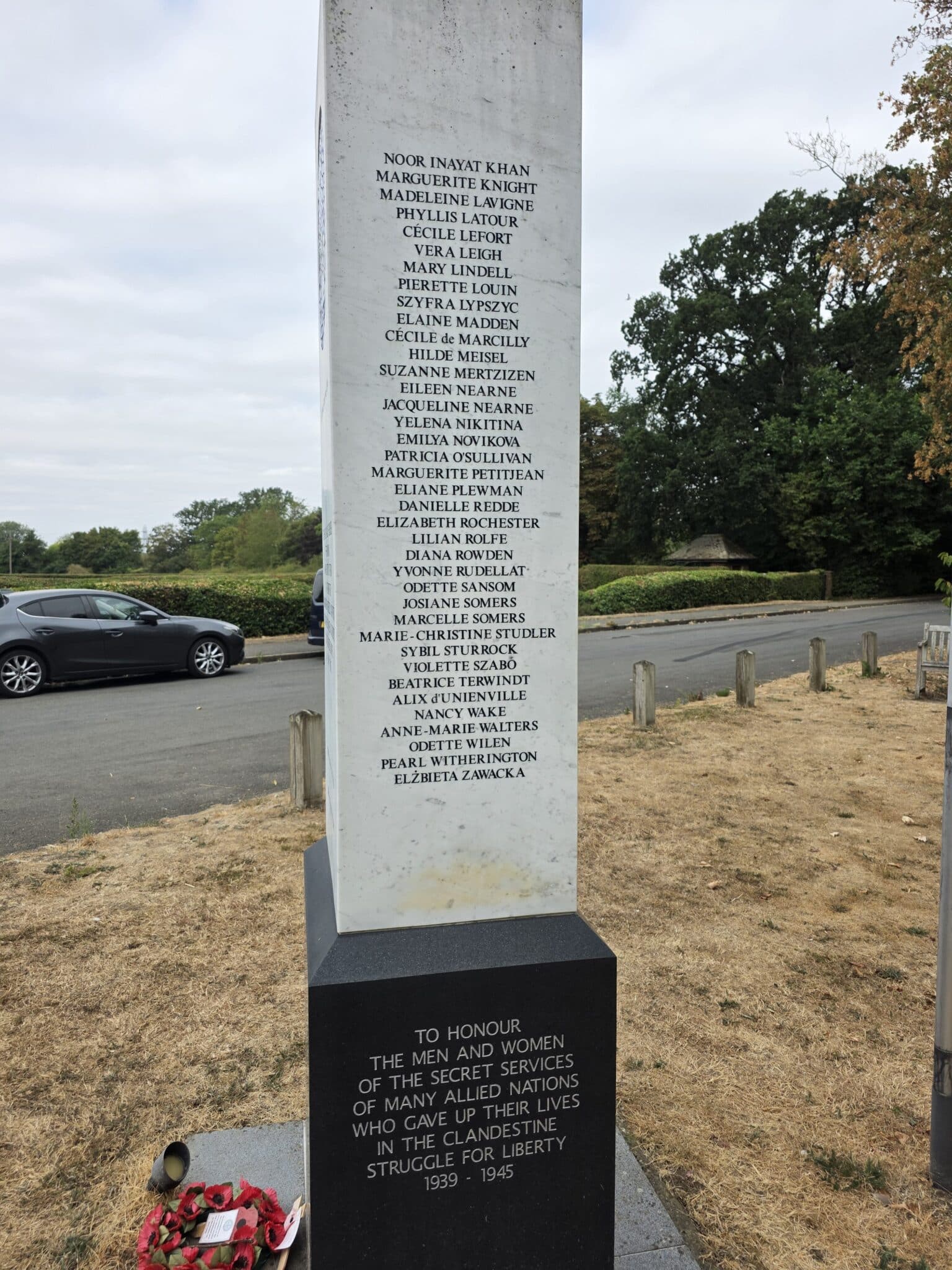
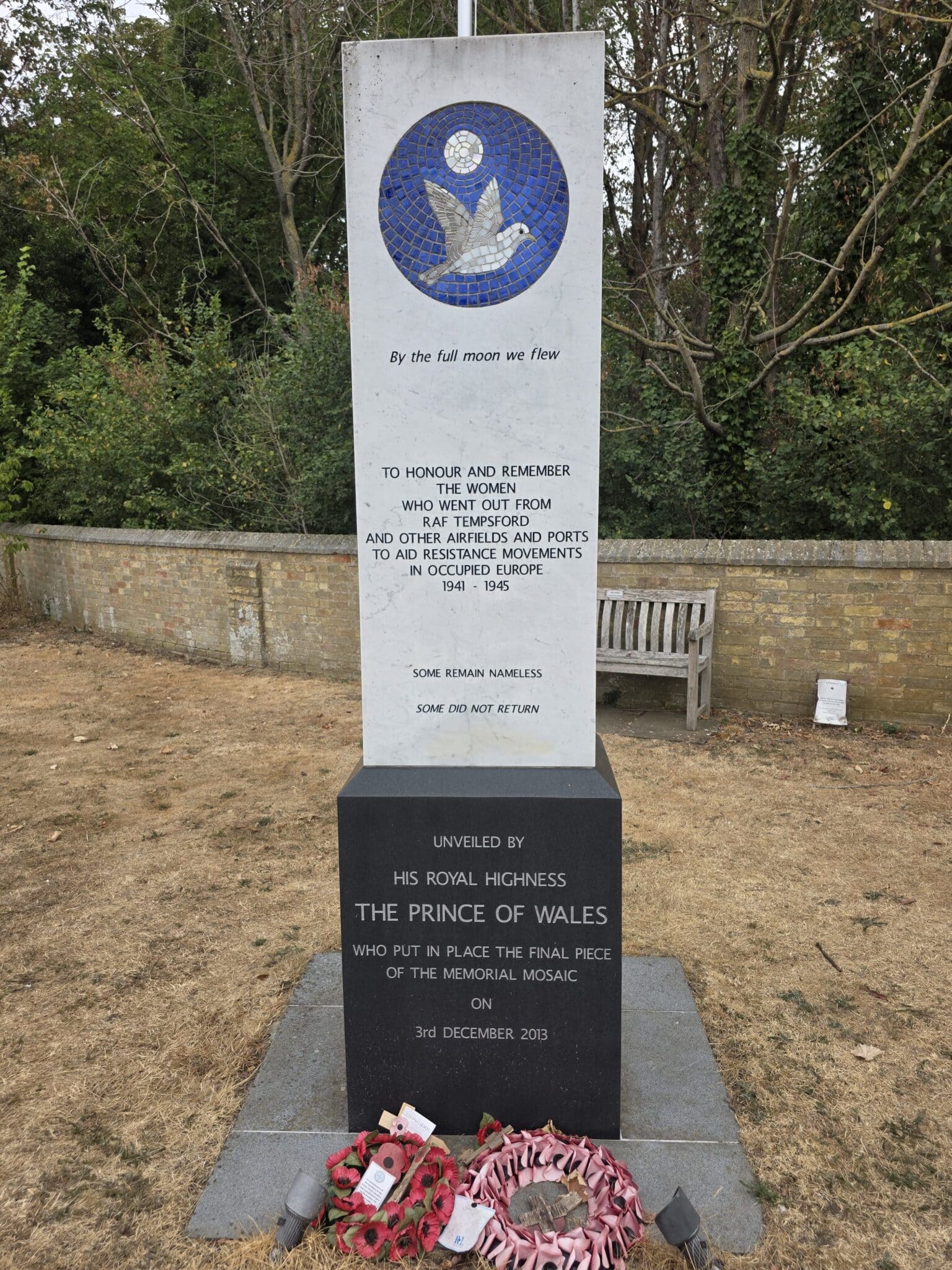
This small village that has two war memorials. One to remember the war dead from both the world wars and a second one to remember the women who were SOE agents (Special Operations Executive) who flew into occupied Europe during World War II from RAF Tempsford assisting the resistance groups in acts of espionage, sabotage and subversion. The memorial remembers the name of these agents who lost their lives in the hands of the Gestapo, Nazi Germany’s political police force. The memorial bears the name of 75 know women agents of who 29 were arrested, 16 were executed, 3 died of illness whilst imprisoned and one committed suicide using a cyanide L-pill before being captured.
In January 2025, the plans for early construction of the new railway station opened speculation that it would be to serve a substantially larger population. In September 2025, housing secretary Steve Reed announced Tempsford as the site for a new town, with work to begin "before the next election". In September 2025, the government announced Tempsford as the site for a new town, with work to begin "before the next election".
The current population for Tempsford is approximately 600 with roughly 300 houses and just over 600 residents.
Tempsford is a major proposed development by the government's New Towns programme; the project aims to transform a rural area of fewer than 600 residents into a sustainable settlement of 25,000 to 40,000 homes and over 100,000 people estimated to be living here.
Eight GOC members met at the start of the walk. A warm morning with expected temperatures reaching 27c by mid-afternoon. (Midweek temperature has exceed 36c here). Crossing the footbridge over the A1 we walked through the east side of the village cossing the main LNER railway and descending onto the tracks that were once the RAF Tempsford airfield.
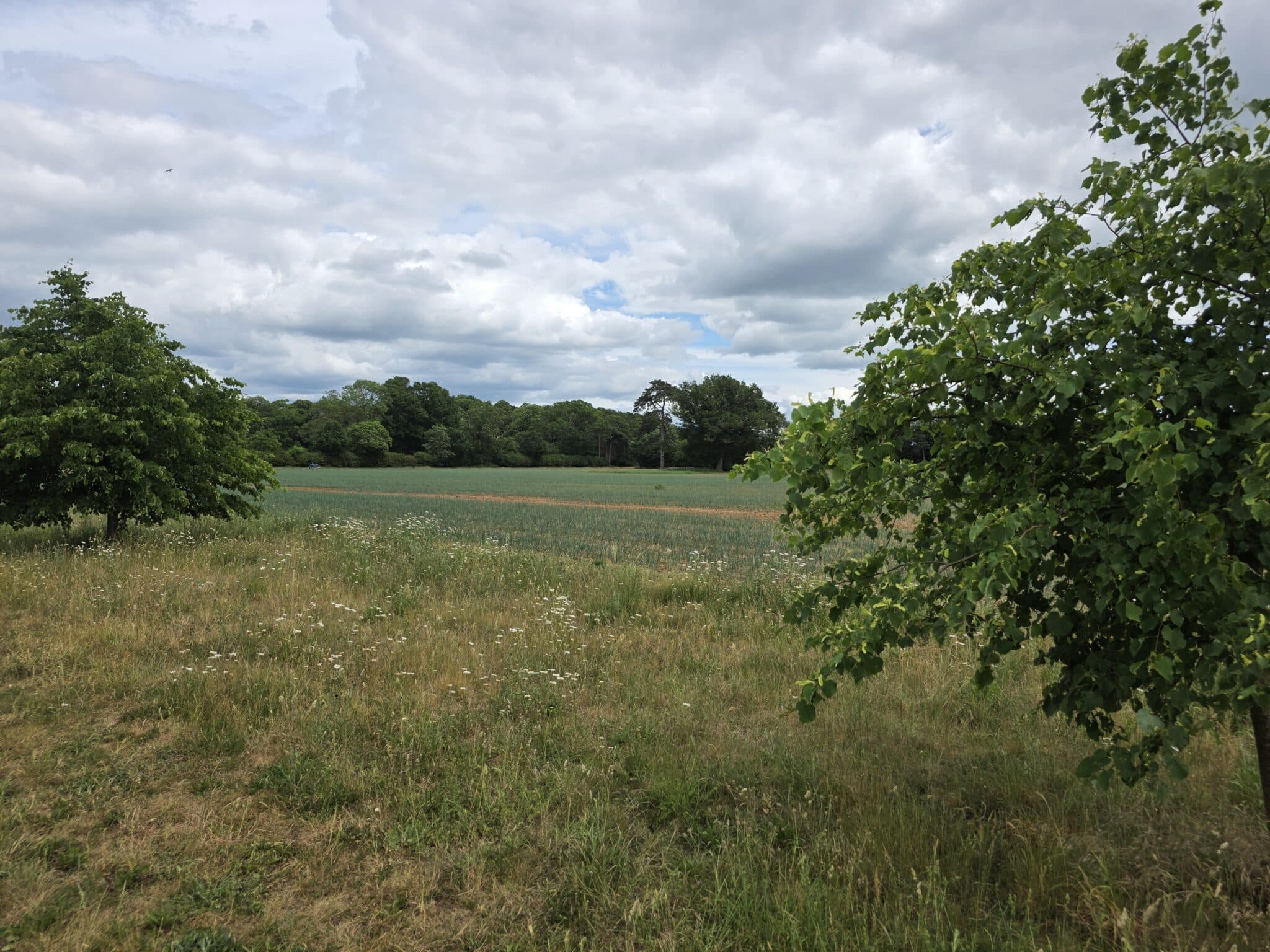
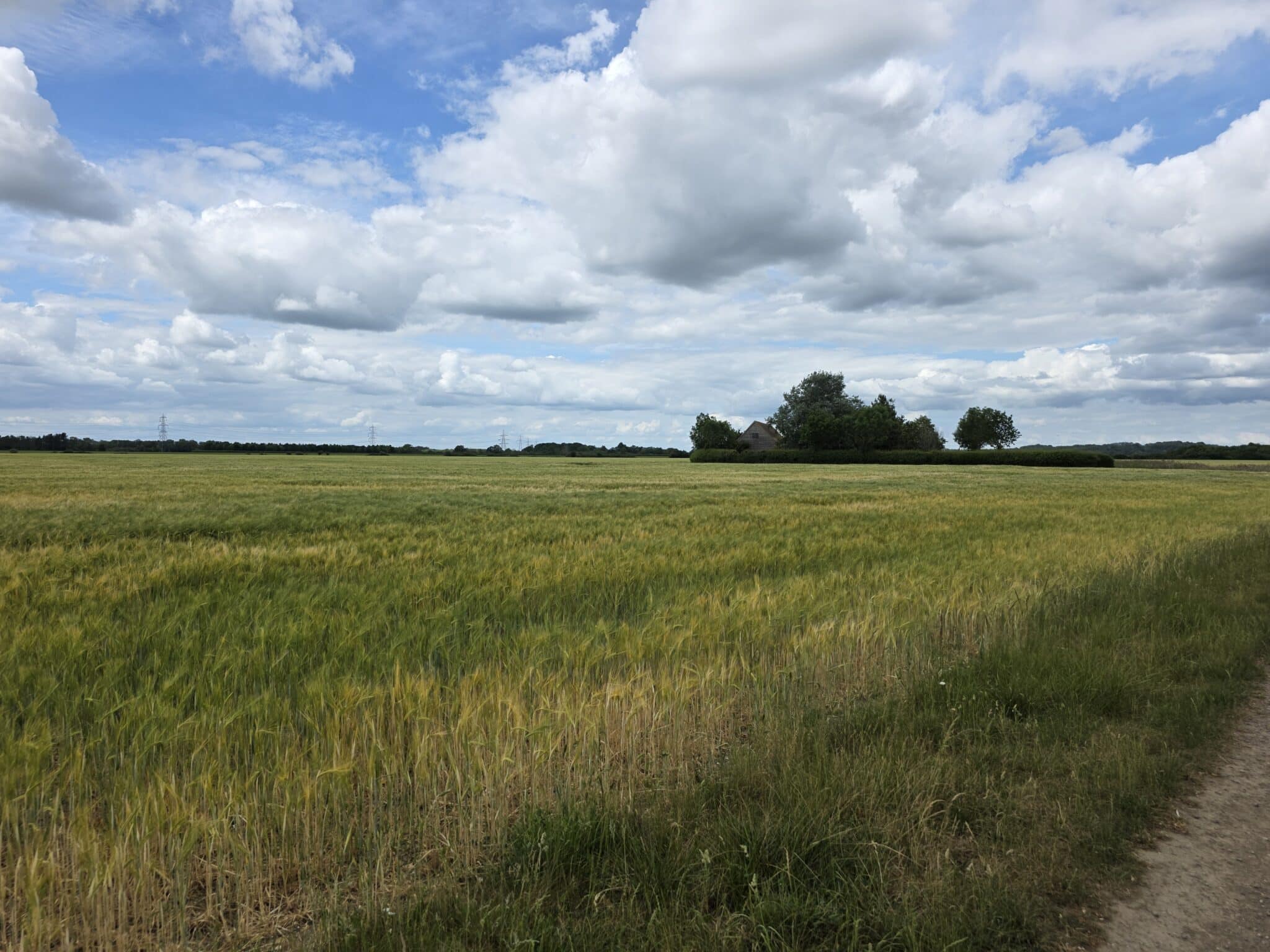
These days the once airfield is arable farmland. The only thing different in the distance was a barn shrouded within a clump of trees. Before passing the barn though, we headed on towards the village of Everton via the grounds of Woodbury Hall.
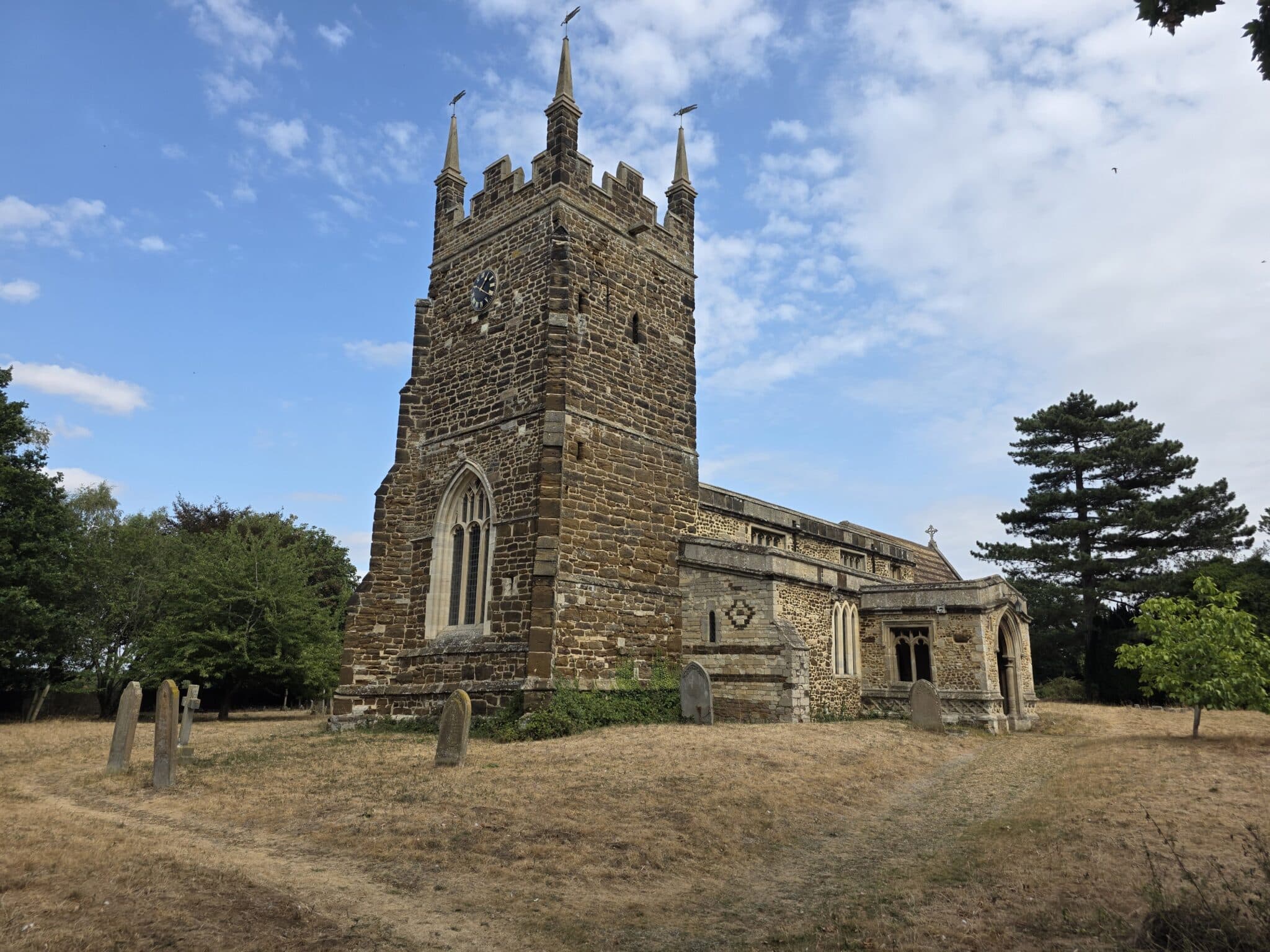
Lunch was in the grounds of St Mary’s Church on Everton after walking 4.5 miles where a gentleman inside the church was playing the church organ was quite surprised that eight men were listening to him practicing whilst eating their lunch when he was leaving the church.
After lunch we continued walking through the village of Everton before descending back into farmland and what was RAF Tempsford.
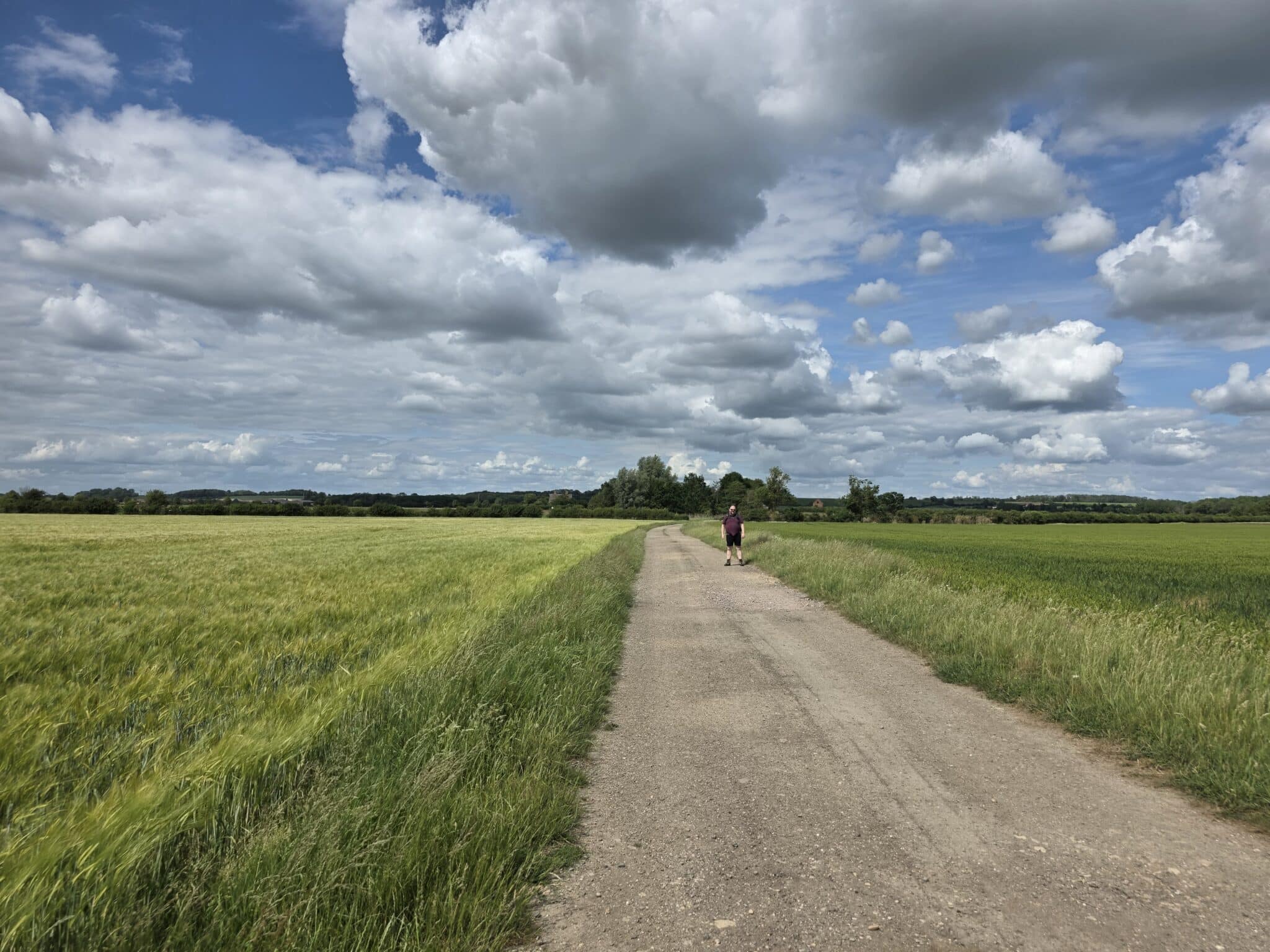
The walking surface turns from grassy fields and paths into straight concrete wide paths. They are straight because it was once a roman road and during World War II was converted into an airfield runway. Walking a bit further we reach the barn we saw earlier on the walk in the distance. The barn being the famous Gibraltar Barn.
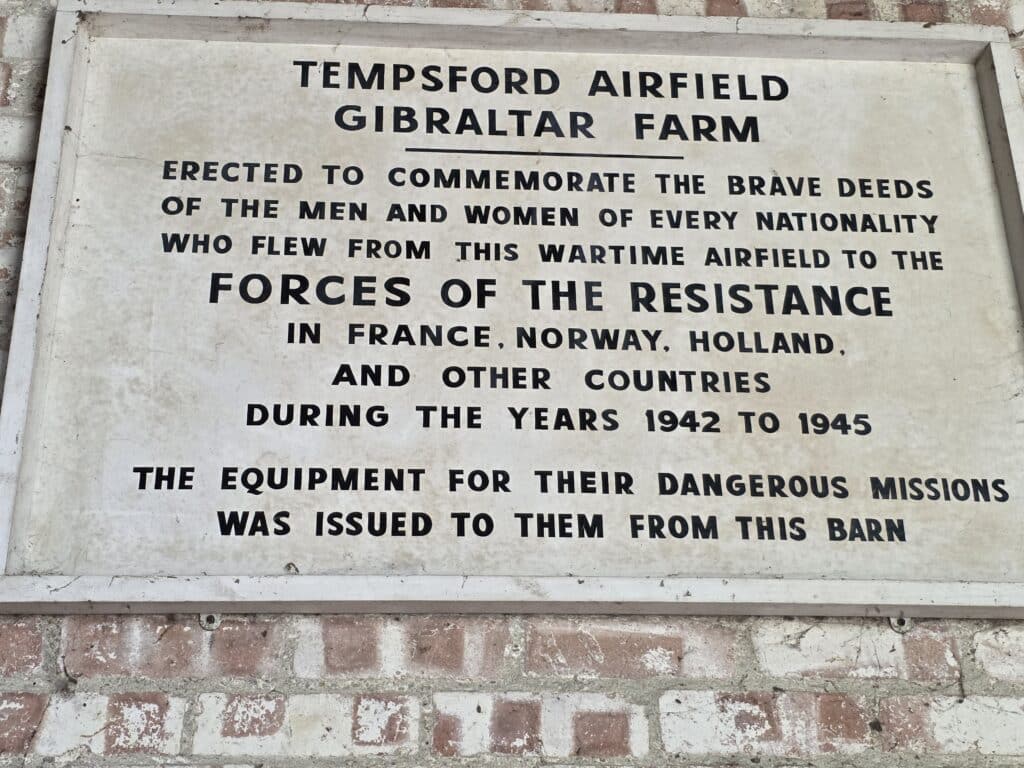
Gibraltar barn was the place that all SOE agents were brought to be kitted up with whatever they needed as well as being de-sanitised of anything British (cigarettes, perfume, clothing) that may have given them away as agents once on the ground.
Walking through this open countryside and these farm fields you would never imagine that this area played a pivotal part during World War II. RAF Tempsford was an important base during this period as it was from here that agents were flown to and from occupied Europe.
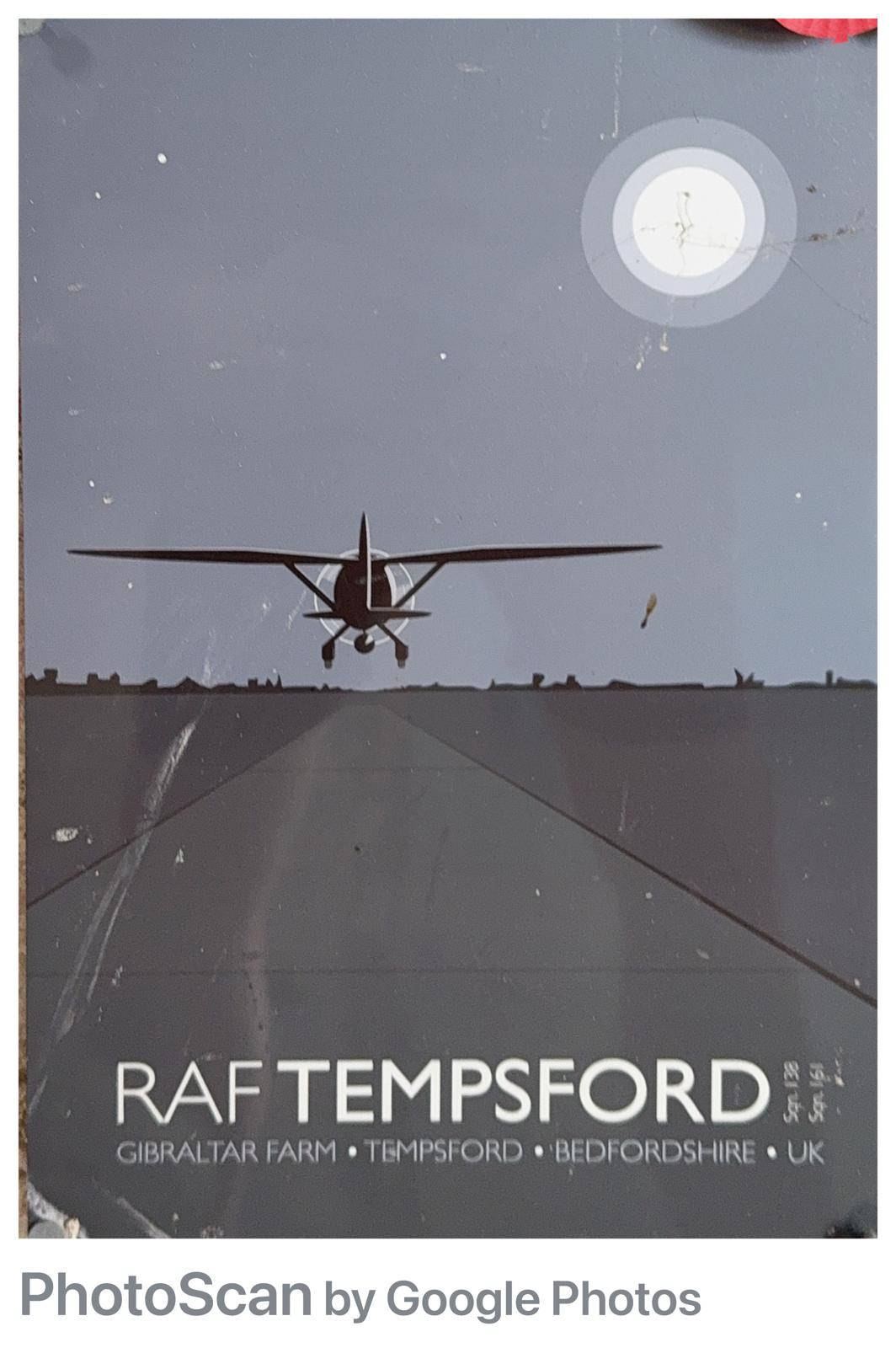
The airfield was home to 138 (Special Duty) squadron and 161 (Special Duty) squadron which dropped supplies and agents into occupied Europe for the Special Operations Executive (SOE). 138 (SD) squadron did the bulk of the supply (arms ammunition, radio set, money) and agent drops, parachuting them in, whilst 161 (SD) squadron had the Westland Lysander flight and did the insertion and pick up operation in occupied Europe. These planes specialised in incredibly dangerous and clandestine landings on remote farmland in enemy territory to drop off and pick up VIPs & allied agents.
Built in 1941 and constructed over marshland the base was deliberately designed to blend into the rural landscape. Runways feature painted lines to mimic hedgerows and hangars were camouflaged to look like dilapidated farm buildings. The base was highly restricted with operations meticulously coordinated during moonlight periods when visibility allowed navigators to reach the continent.
Special Operations Executive (SOE) was formed on 13 Jun 1940 after Winston Churchill became Prime Minister. SOE was formed from the amalgamation of three existing secret departments MI(R) (a War Office ranch), Electra House (a Foreign Office propaganda unit), and Section D of MI6. Its primary mission was to wage a clandestine war behind enemy lines, conducting sabotage, subversion, and reconnaissance, and to support local resistance movements in occupied countries.
Headquartered at 64 Baker Street in London, the SOE’s official purpose was to put British special agents on the ground to “coordinate, inspire, control and assist the nationals of the oppressed countries.” Minister of Economic Warfare Hugh Dalton borrowed irregular warfare tactics used by the Irish Republican Army two decades before. The “Baker Street Irregulars,” as they came to be known, were trained in sabotage, small arms, radio and telegraph communication and unarmed combat. SOE agents were also required to be fluent in the language of the nation in which they would be inserted so they could fit into the society seamlessly. If their presence aroused undue suspicion, their missions could well be over before they even began.
SOE agents and the organization itself were commonly known by nicknames like "Churchill's Secret Army," "The Baker Street Irregulars," and the "Ministry of Ungentlemanly Warfare."
Agent potentials were highly screened for their suitability and would goes through rigorous training before they were sent into occupied Europe. Women were sent into active duty from Jan 1942. They were recruited mainly as radio operators and couriers.
- Espionage and Intelligence Gathering
SOE agents infiltrated occupied territories to collect intelligence on enemy movements, resources, and plans. This included clandestine radio communications, forged documents, and covert reporting to Allied HQs. - Sabotage and Subversion
Agents were ordered to destroy strategic infrastructure such as trains, bridges, factories, and power supplies. They also worked to foment resistance through guerrilla warfare, propaganda, and political agitation. - Supporting Resistance Movements
SOE coordinated with and supplied local resistance groups with arms, ammunition, training, and logistical support. This included delivering supplies by parachute or via light aircraft and providing military training. - Escape and Evasion Operations
The SOE ran escape and evasion lines alongside MI9, helping downed airmen and Allied personnel reach neutral countries or Allied forces - Disguise, Deception, and Propaganda
Operatives used forgery, black propaganda, bribery, and infiltration to mislead the enemy and undermine morale
Life expectancy of an SOE agent was just 6 weeks
Some well‑known SOE women include:
- Christine Granville – first female SOE special agent
- Odette Hallowes – captured and tortured by the Gestapo
- Nancy Wake – leader of a French resistance group
- Noor Inayat Khan – wireless operator and saboteur
- Violette Szabo – combatant and intelligence officer
One agent Nancy Wake was a journalist from New Zealand. In the 1930s, she was living in Marseille with her French industrialist husband, Henri Fiocca, when the war broke out. After the fall of France to Nazi Germany in 1940, Nancy was so appalled by the brutality of the occupying forces that became a courier for the Pat O'Leary escape network As a member of the escape network, she helped Allied airmen evade capture by the Germans and escape to neutral Spain. In 1943, when the Germans became aware of her, she was name by them as the ‘white mouse’ as she always evading capture. Eventually she was caught by the Gestapo and interrogated beaten but escaped capture with the assistance of here industrialist husband. Through the escape network she made it to Spain and then went to the United Kingdom. She was SOE material and there was no hesitation in recruiting her as an SOE agent.
On completing her training, she flew out from RAF Tempsford On 29–30 April 1944, as part of the three-person "Freelance" team headed by John Hind-Farmer (code name "Hubert"), she parachuted into Auvergne province France. Resistance leader Henri Tardivat discovered her tangled in a tree. He remarked, "I hope that all the trees in France bear such beautiful fruit this year," to which she replied, "Cut out that bullshit and get me out of this tree Denis Rake a radio operator, was the third member of the team.
Nancy Wake was known for her straight talking and honest views and when asked later about Denis Rake she said “He was queer, and I loved him…” and the expression ‘queer’ should not be taken as an insult, many of the negative comments about him were due to the homophobia he experienced during the 1940s which was also a time when his lifestyle was illegal in the United Kingdom.
Rake as a most unlikely agent because during his training he refused to go over the assault course, refused to handle firearms and explosives because he did not like the loud ‘noise’ and constantly argued that a wireless operator would not need to use firearms and would not be involved in sabotage. A student refusing to undertake this training would normally be rejected but not only did Rake display a high degree of competence as a wireless operator he was also correct: although wireless operators were advised to carry a firearm for their personal protection it was not compulsory and their job was not to engage enemy forces or be involved in acts of sabotage; instead, they had to remain in hiding whilst maintaining wireless contact with London.
Rake was employed as the second butler at the London residence of actor Douglas Fairbanks Jr when a letter arrived addressed to Major Denis Rake MC. It was also said Fairbanks was surprised that his small, openly gay and very camp butler had been a major who was awarded the Military Cross, and after Fairbanks handed him the letter Rake said, “Oh dear. I was hoping you would never hear about all this nonsense.”
The team was to be a liaison between London and the local maquis group headed by Émile Coulaudon (Gaspard). The team's initial relationship with Gaspard was frosty. He wanted money and arms from the allies but was not cooperative until the French forces of the interior in London. the umbrella organization for the disparate resistance groups in France, instructed him to cooperate. SOE began sending in large amounts of arms, equipment, and money
The liaison between Nancy Wake and her wireless operator, Harry Rake improved to the point where the French resistance group were absolutely delighted with the volume of Rifles, ammunition and money were free-falling out of the skies.
Between 1942 and 1945 the squadrons successfully delivered nearly 1,000 agents and dropped 29,000 containers of war materials to resistance networks.
The missions were exceptionally perilous. Over 120 aircraft failed to return resulting I the loss of hundreds of aircrews and agents who were subsequently captured, tortured or executed.
Churchill had created this operation in a bid to set Europe alight. Although Hitler knew of the existence of RAF Tempsford and, has issued an instruction to “find this viper’s next and obliterate it” They were never able to identify the exact location in order to bomb it and doubtful whether Hitler know the full extent of the activities emanating from here, so widespread were they.
The station RAF Tempsford was closed in 1947 and the Closed as an RAF airfield in 1960. The land thereafter returned to agricultural use.
This place was special then, special now and special always
From Gibraltar barn we walked back the final 2.5 miles to Tempsford Church end for a well-deserved drink at the Wheatsheaf where we unwound from the 10.5 mile walk and the story behind the walk we touched upon
Events featured
Tempsford, Bedfordshire
- Easy Walk
- History & Heritage