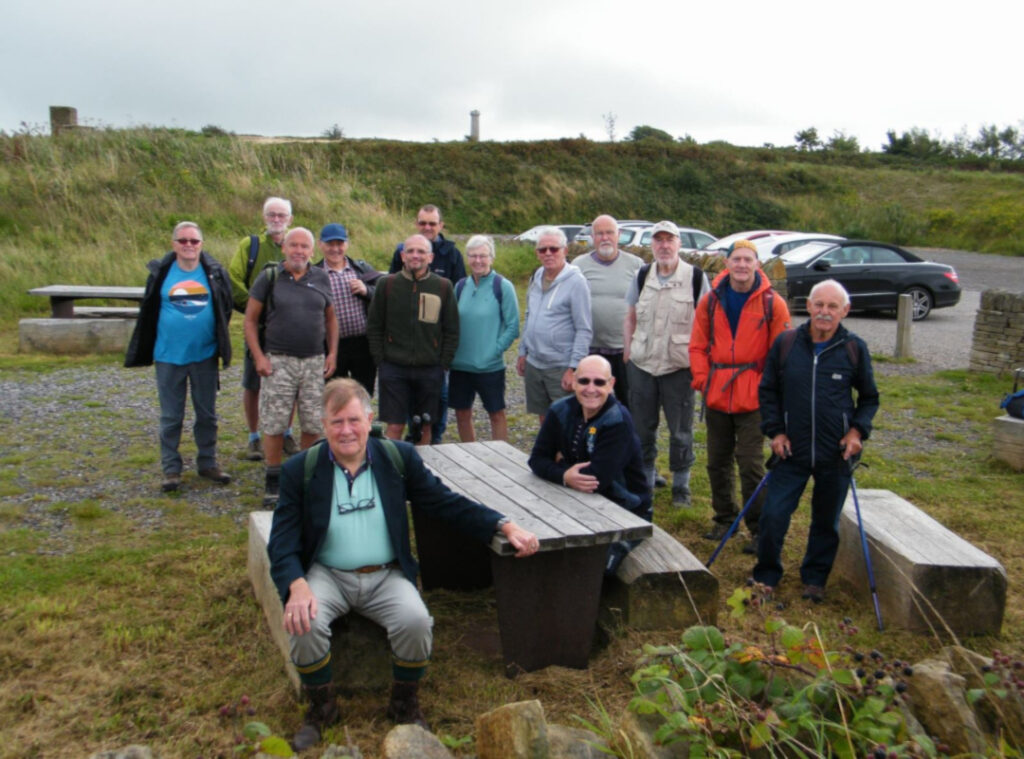

On a cloudy Sunday with gusting winds, 15 members assembled in the car park of the Brewers Arms, Winterborne St Martin, waiting to be ferried up in four cars to our walk start, at the Black Down Carpark.
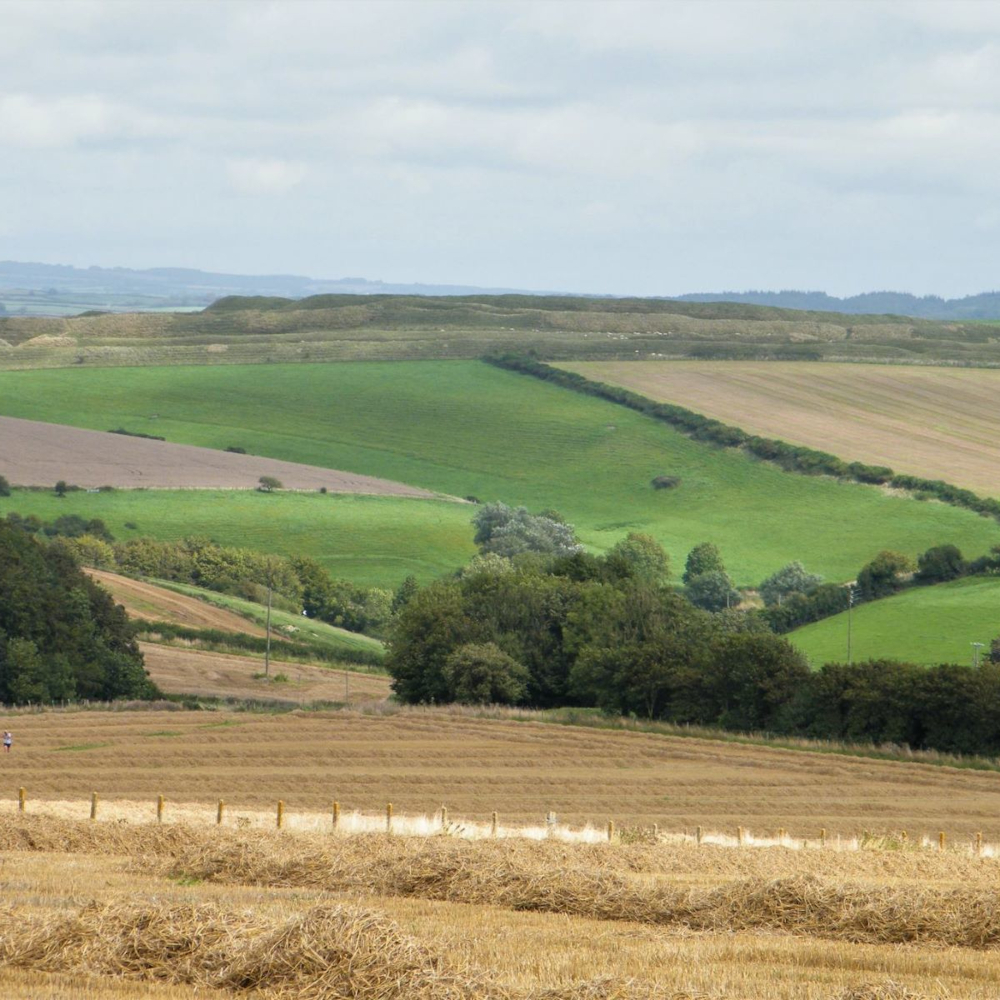
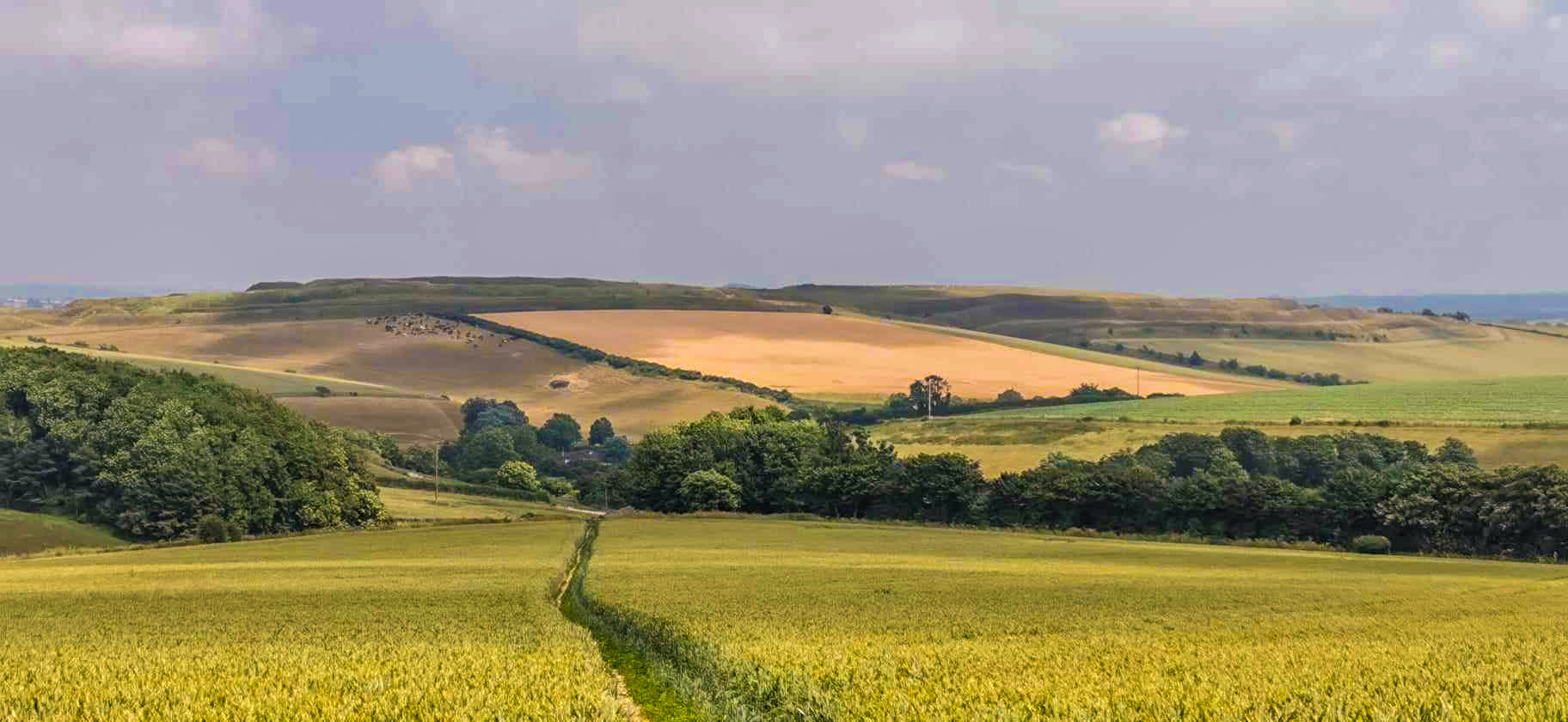
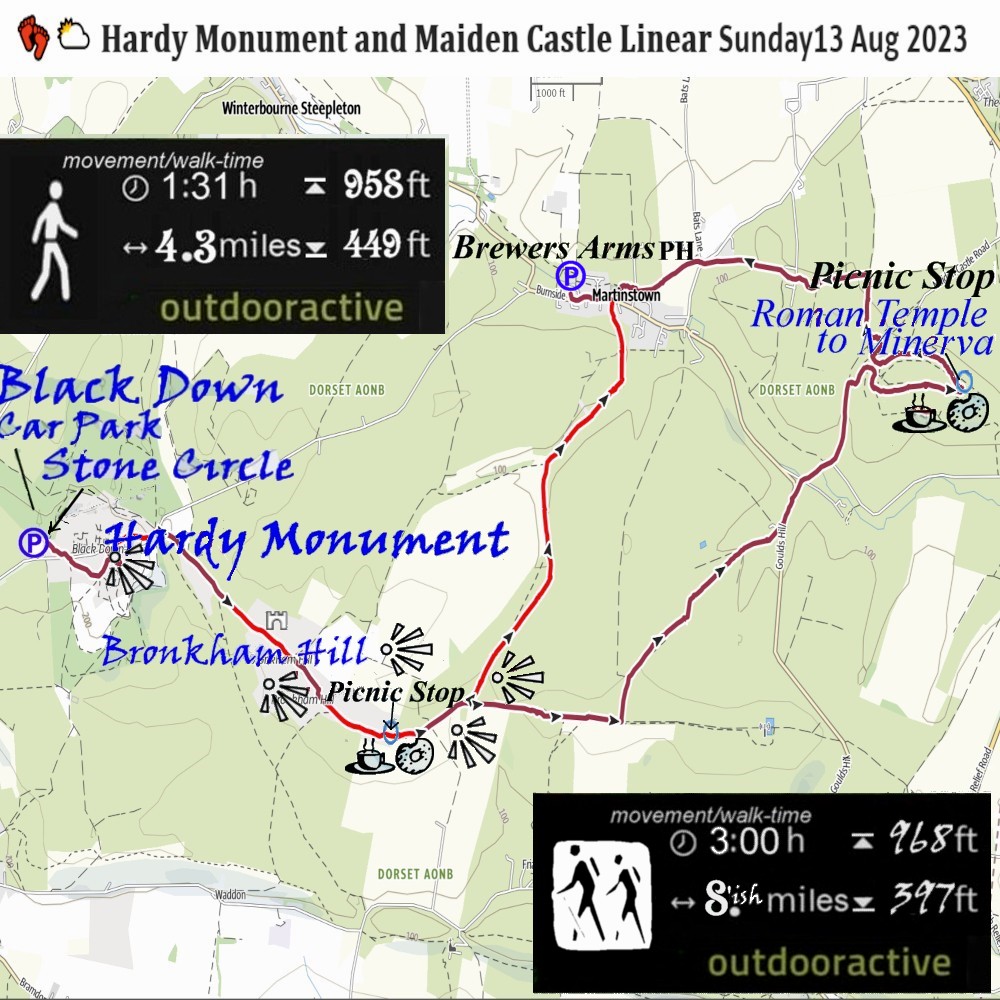
Today’s walk offered the choice of Short or Long distance with an easy route along the spine of the South Dorset Ridgeway path through an area designated as Outstanding Natural Beauty (AONB) with extensive panoramic views in all directions.
Despite distant poor weather, you could feel the sun trying to break through, and looking southwards to the Jurassic Coast and the Fleet, you could see much better sunnier weather out over Weymouth Bay and the Isle of Portland, and out over-sea from the Fleet, while turning inland and behind us, a total contrast: darker clouds lit by hazy sunlight, and sheets of showery mizzle like curtains moving north westerly. Leading the group it felt like Moses leading his flock away from the threat of wetter weather.
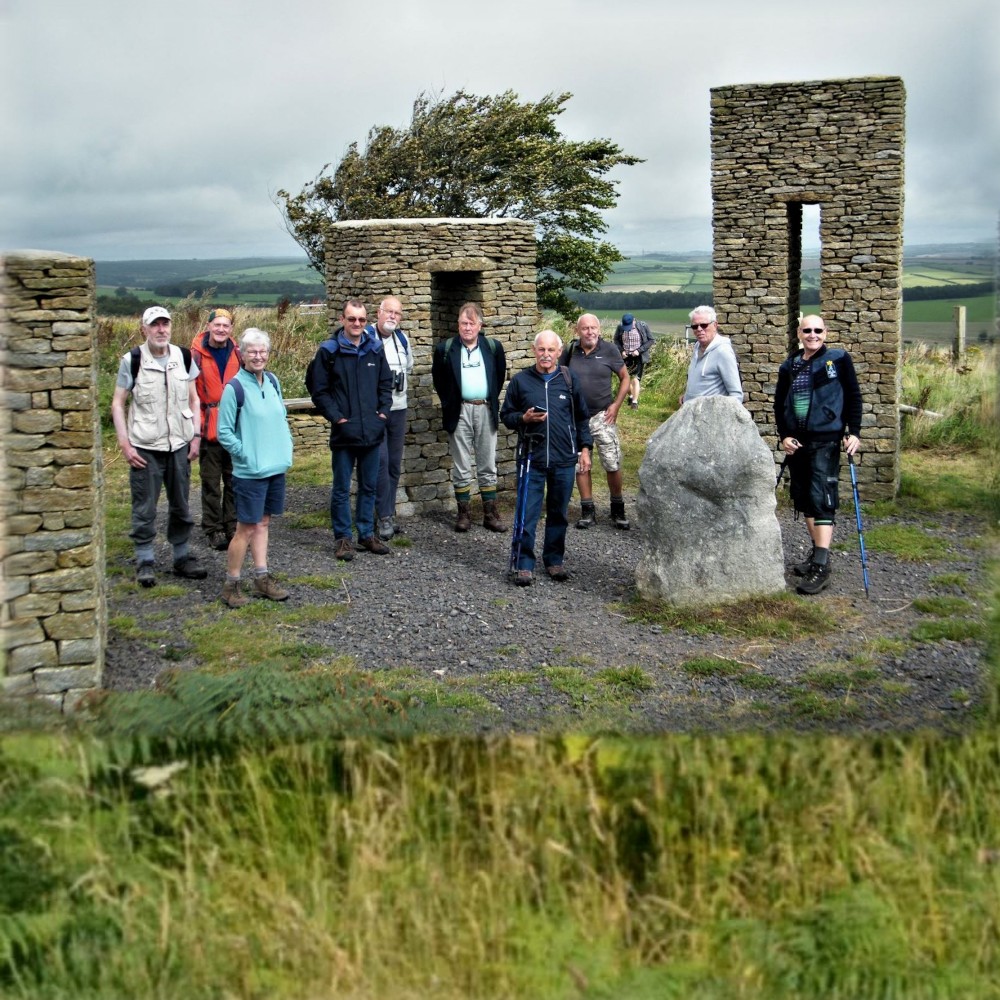
With the promise of the forecast improving, in high spirits our band of 15 set off on the newly made-up visitors path leading us to a stone-built ‘circle’ consisting of five ‘totems’ constructed of local Forest Marble Portland stone. This architectural sculpture was built by artist Amanda Moore circa October 2018; a solar and lunar monument dedicated to the summer and winter solstices, arranged in blocks with apertures, built using dry-stone walling techniques; created with National Lottery money & the Heritage Lottery Fund (HLF) and Arts Council England, as part of a public art collaboration across Dorset.
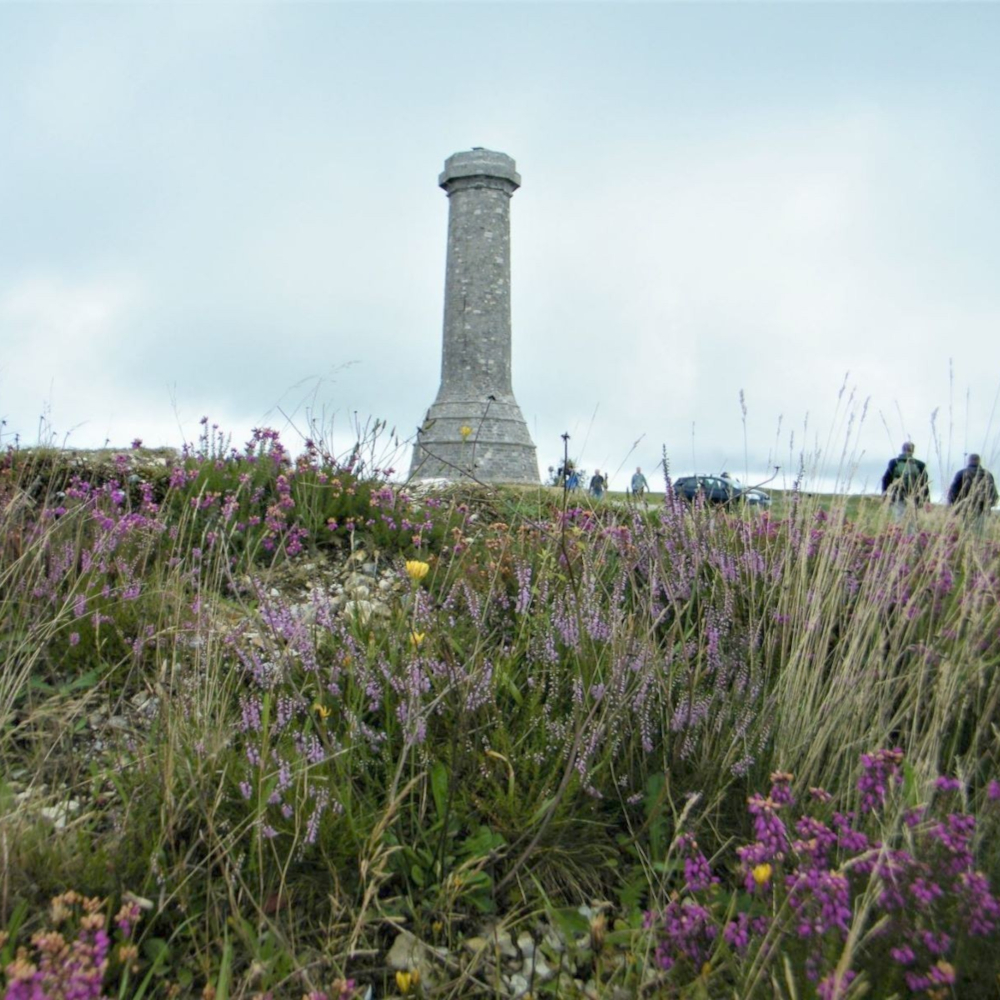
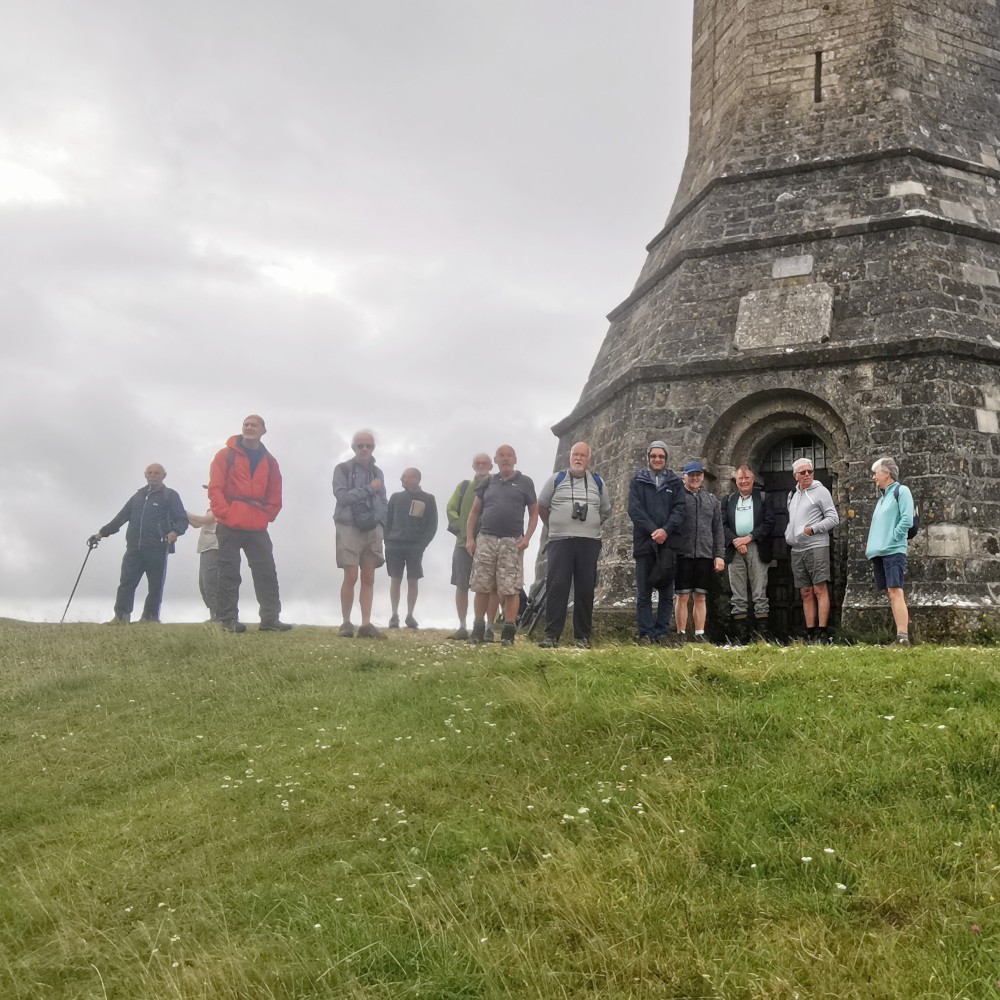
The made-up gravel path led us across a road, and on and up through old gravel shake deposits (once the bed of a Jurassic shallow sea) to a plateau and the majestic Hardy Monument standing proud, dedicated in 1846 to Vice-Admiral Sir Thomas Masterman (Kiss-me) Hardy, 1st Baronet, GCB (5 April 1769 – 20 September 1839) ~ the Royal Navy officer and not the author Thomas Hardy.
The monument actually has an Open Day when the public can go up the steep spiral stairs of the tower, for 3 days of the year, in slots of half an hour. Access is by appointment, booking over the phone or by email. This years dates: 10am til 3.30-4pm, Friday 8th, 9th & 10th September! Booking advisable. Google Open Day Hardy's Monument.
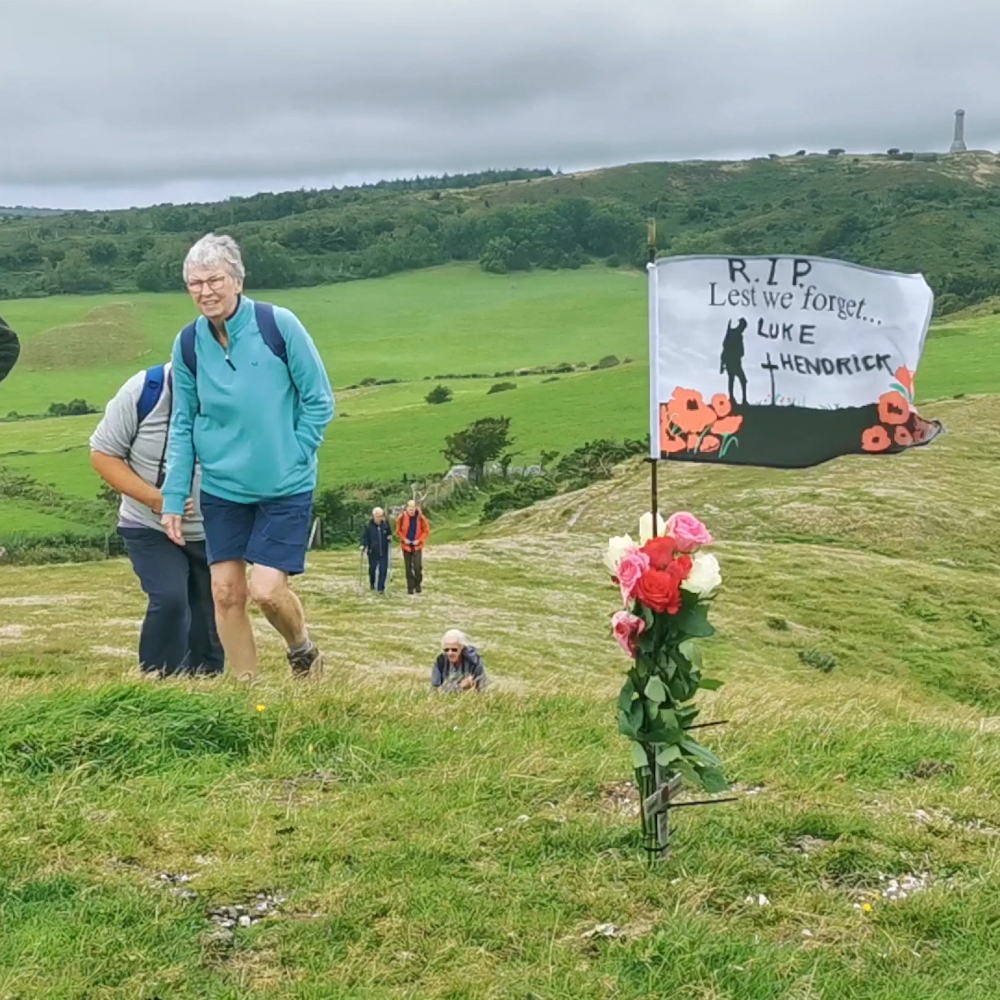
This is the highest point on the South Dorset Ridgeway. Despite the wind, the dry ground felt as though it was giving off heat, and in spots of the lee-side it felt quite warm. After a photo call at the monument, we descended the plateau and headed east along a stretch of the Ridgeway called Bronkham Hill; another site of special interest:
Home to skylarks (“Skylark Ridge”) we passed through an abundance of tumuli, and one in particular with a ring earth embankment, that signifying the burial site was the site of someone of notable importance of the time; the barrow now long-since collapsed and weather worn. Bronkham hill was the site of a stone age settlement, tumuli amongst shake sink holes, most prominent in 2020, now looking like grass craters of varying depths. Historically this peninsular had a strategic vantage point from which you could see anybody approaching anywhere from the North, East or South.
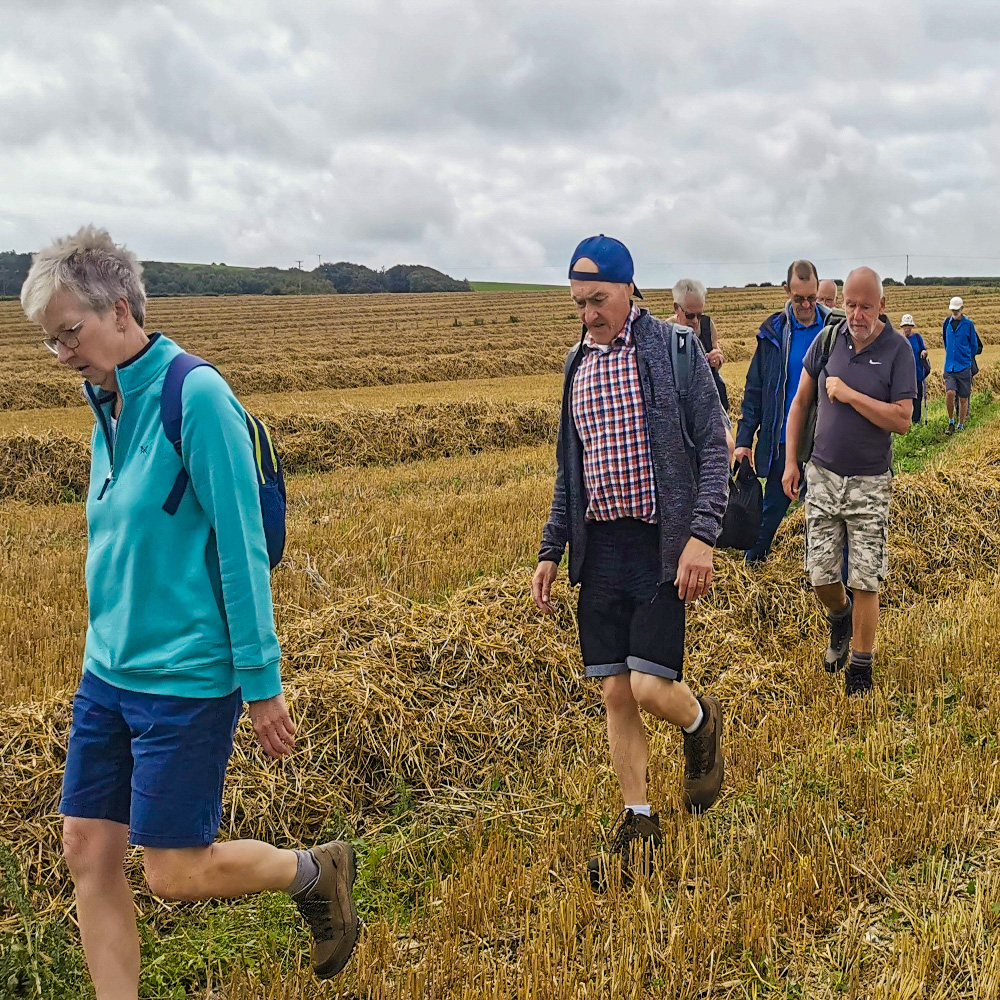
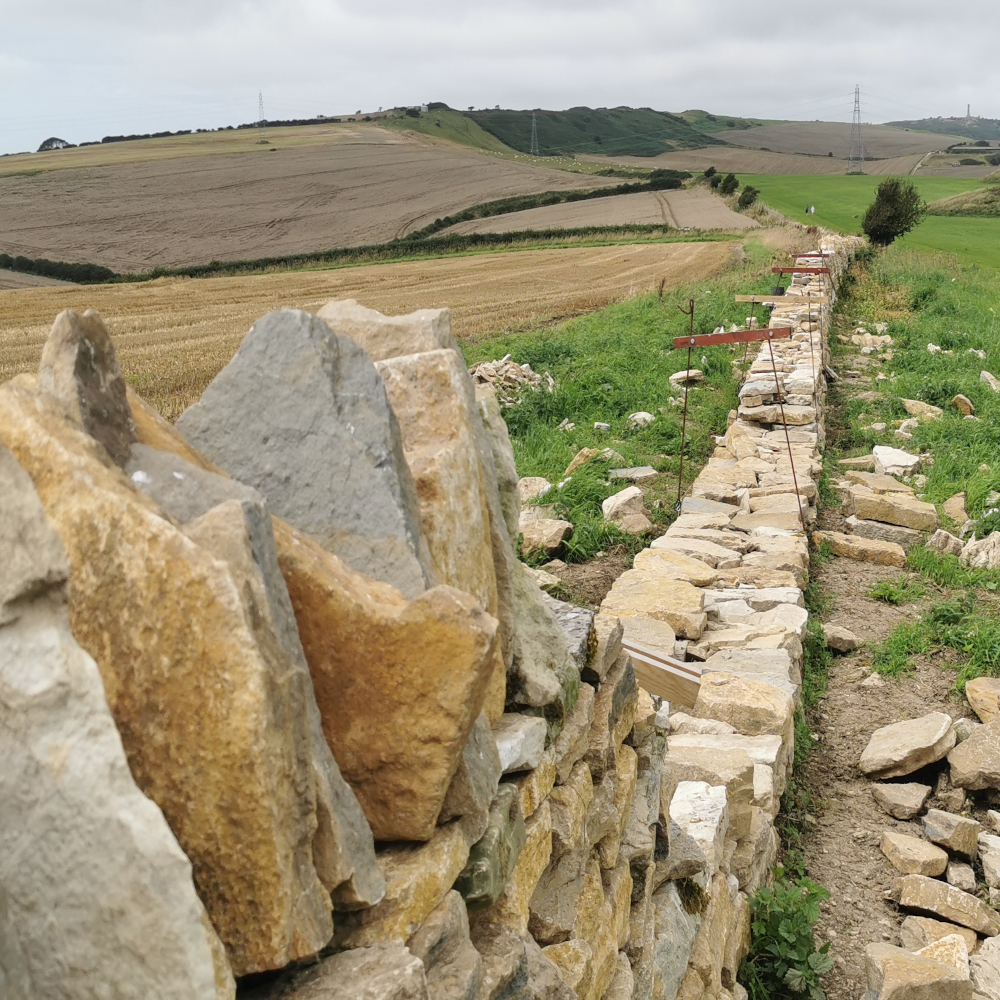
Almost two miles in to our walk we stopped for a refreshments break, and in the lee of the wind, discussed the options of the two group. Three members opted for the shorter walk, so this would be their picnic stop. The rest of us, after drinks, set off to continue our walk along the South Dorset Ridgeway, passing a display of a perfect example of Dorset dry wall building, us then descending through newly cut fields of straw collected up by some tractor in to neat lines without a regard to pubic footpaths crossing their land, and us ramblers having to navigate these banks trying to leave as little an impact on the farmer’s handy-work as possible.
Those on the short walk, took a more direct route back to Martinstown, through the jurassic hillside of vales cut by ancient water flows from retreating glacial ice sheets.
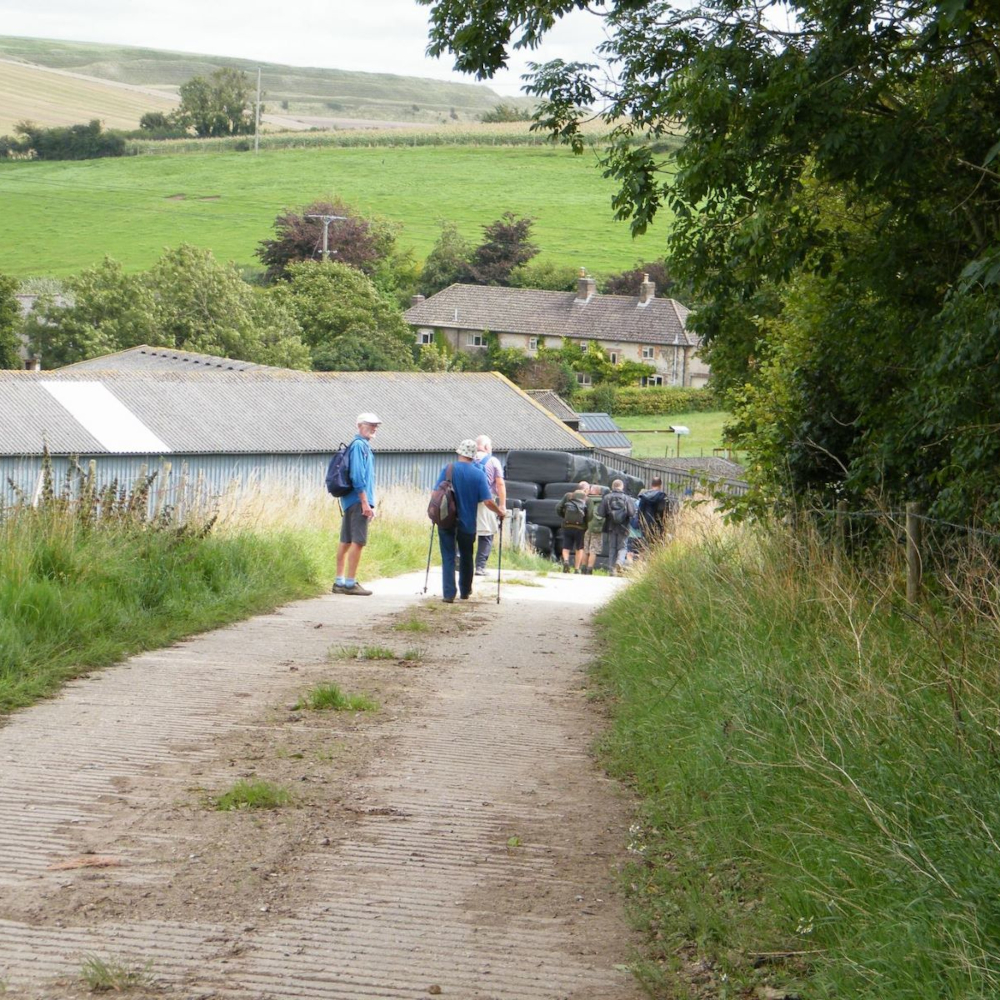
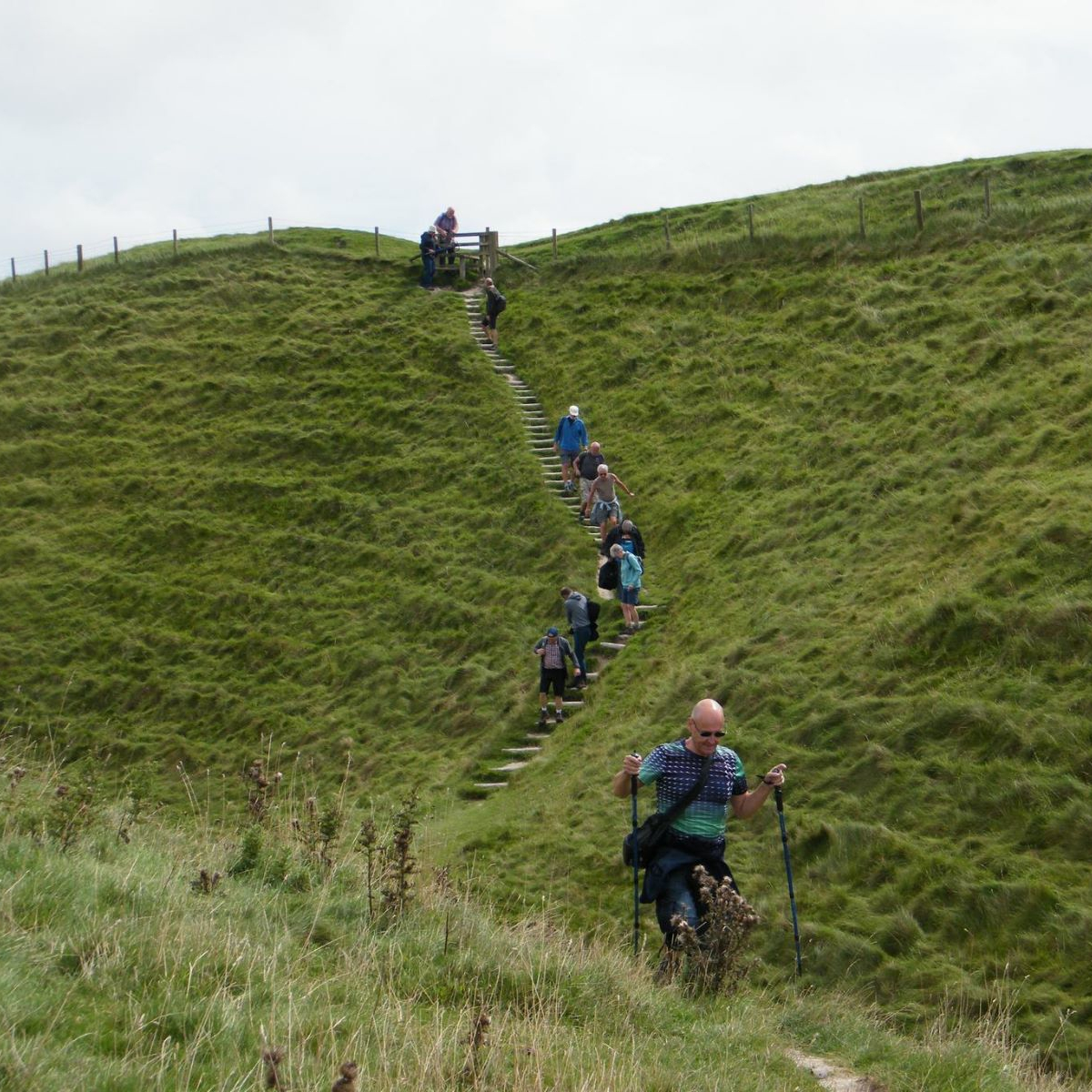
As we made our final descent through the farm hamlet of Higher Ashton, we crossed a main road and began our ascent up a gentle incline, following the vale between two hills, which, at its top revealed itself as the westerly entrance to Maiden Castle. A climb that, although the steepest of our journey so far, turned out to be quite moderate, supporting the classification of this walk being a “moderate trail”.
Maiden Castle is one of the largest and most complex Iron Age hillforts in Britain. Its vast multiple ramparts enclose an area the size of 50 football pitches, and the site was home to several hundred people in the Iron Age (800 BC–AD 43), but fell in to dis-use as residents began migrating to the new conurbation of Durnovaria, where they were won over with commerce rather than battle-assault.
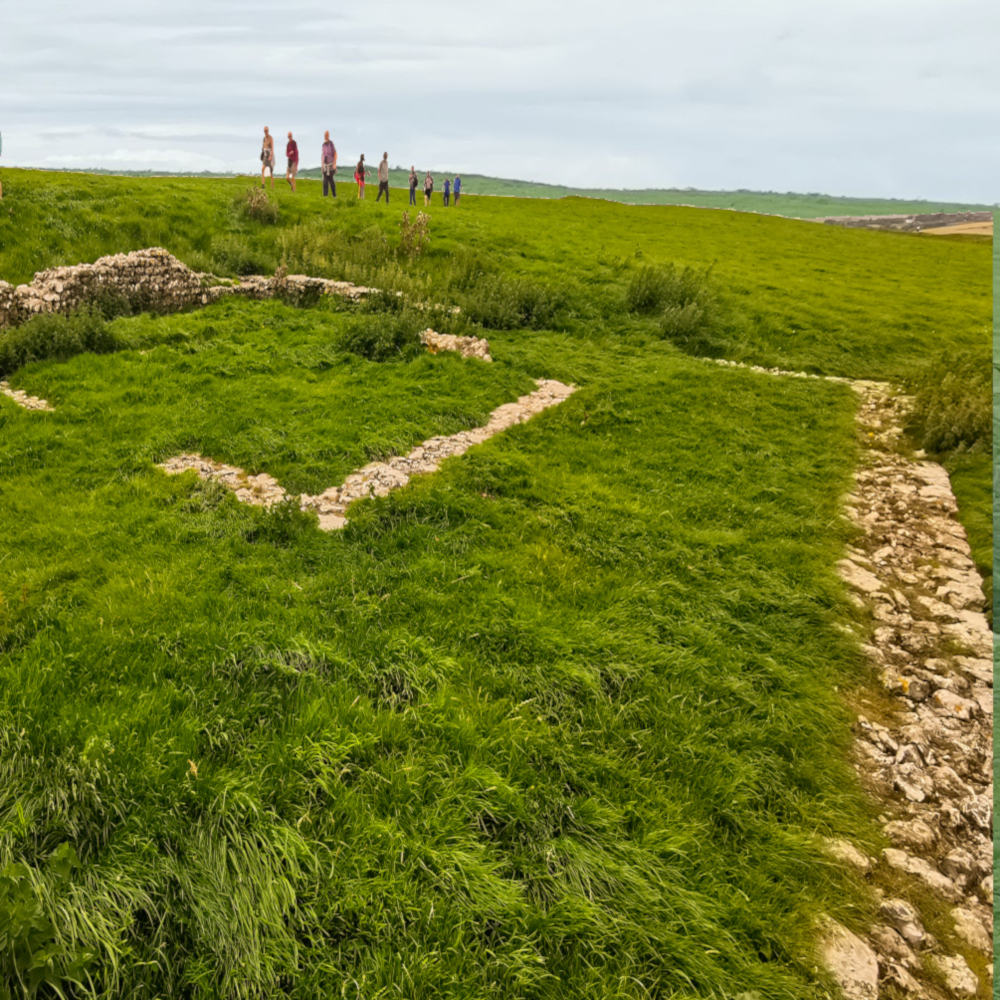
While Group 2 arrived back at the Brewers Arms, we took our food and refreshments break in the site of foundation remains of the Roman Temple dedicated to the goddess Minerva. The farmer seems to have cut back on his sheep this year, as this site appeared looking very sorry for itself. Having seen it in more pristine times, the temple had been left for grass to over grow, and the priest’s residence to be largely overgrown with stinging nettles. Time to get the cattle in, me-thinks.
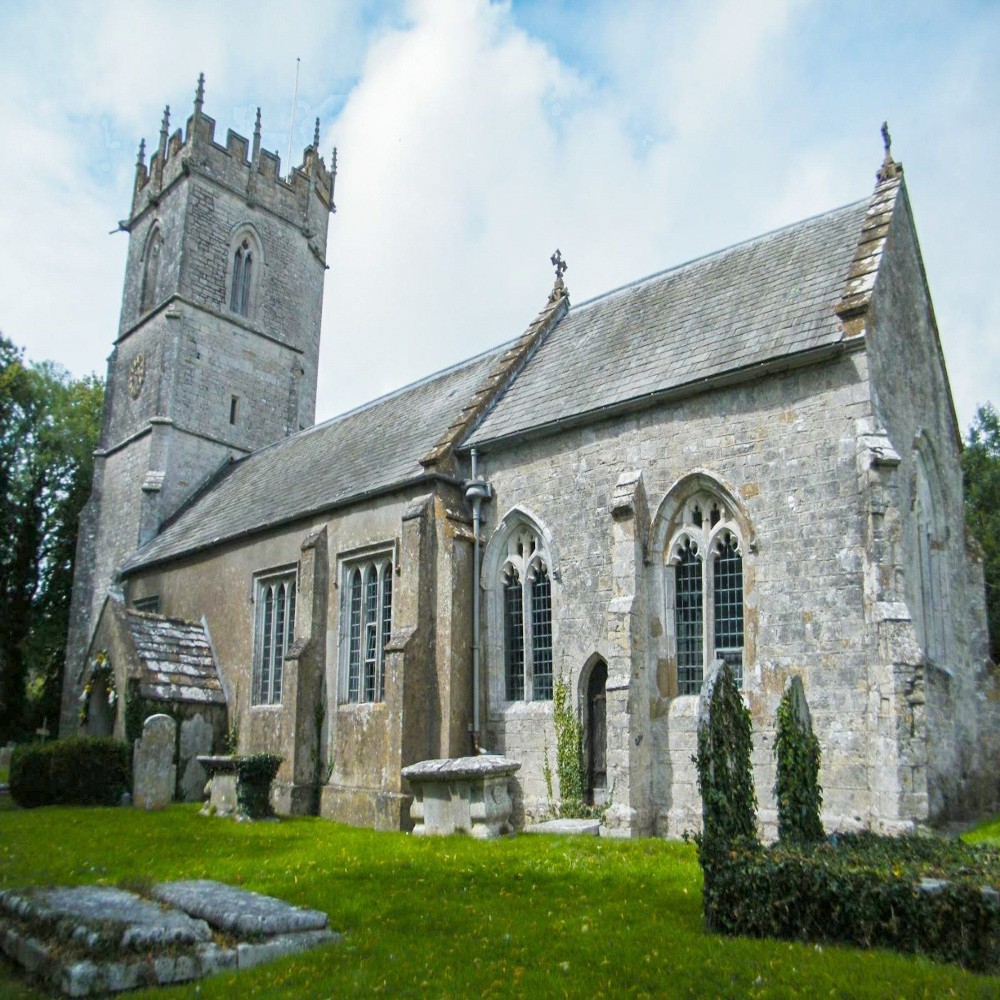
With the weather improving by the hour, we crossed to one of the outer defensive ramparts, offering views of Dorchester and the Duchy of Cornwall estate of Poundbury, to join up with a track that was almost a straight line return back to Martinstown, passing through the church grounds of St Martin, and leading to our final destination, the Brewers Arms….. and back in time for Sunday Roast and drinks to finish off a perfect day.
Sitting outside on benches under parasols, it didn’t matter that there was still a wind.
The day had warmed up, the sun had come properly out, and everyone commented what a wonderful day the walk had been, complimenting on the variety of sites of interest and areas of outstanding natural beauty, the different scenery, and how lucky we had been to have had such good weather, perfect for walking in. Those on the shorter walk, complimented how they’d still been able to enjoy a varied walk, without having to do the extra mileage.
All in all, an enjoyable day out!