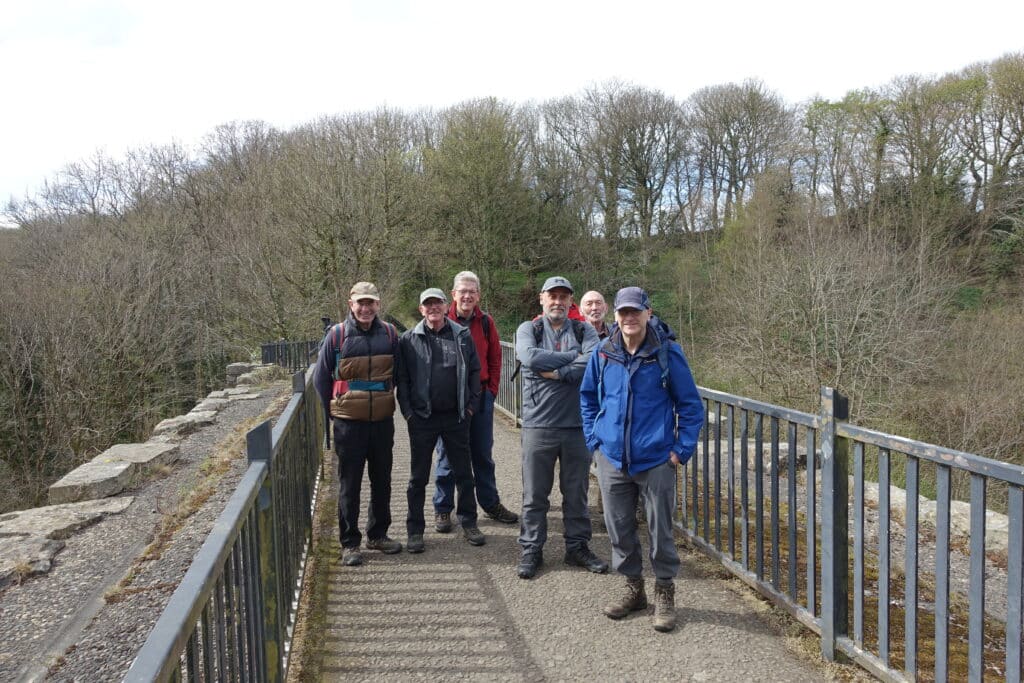

On today’s walk we were offered the chance to explore a part of County Durham rich in industrial history, yet with much in the way of fields, woodland and quiet pathways. The legacy of the old industry is an extensive network of easy footpaths through attractive countryside, with lots to see and enjoy. For those with a transport interest there’s plenty to discover as well.
Fifteen of us met with Jan, our guide for the day, on a bright morning; no risk of muddy footpaths this time as we were experiencing the driest springtime in years. Beamish is of course famous for its nearby open-air museum, but from the village our route started along the route of the former Stanhope & Tyne railway. Now a long-distance rural footpath and cycleway, it was built in the early nineteenth century to carry limestone and coal to the River Tyne, and later to carry very heavy iron ore trains uphill to the steelworks at Consett. The trains stopped running and the line was dismantled in the early 1980s.
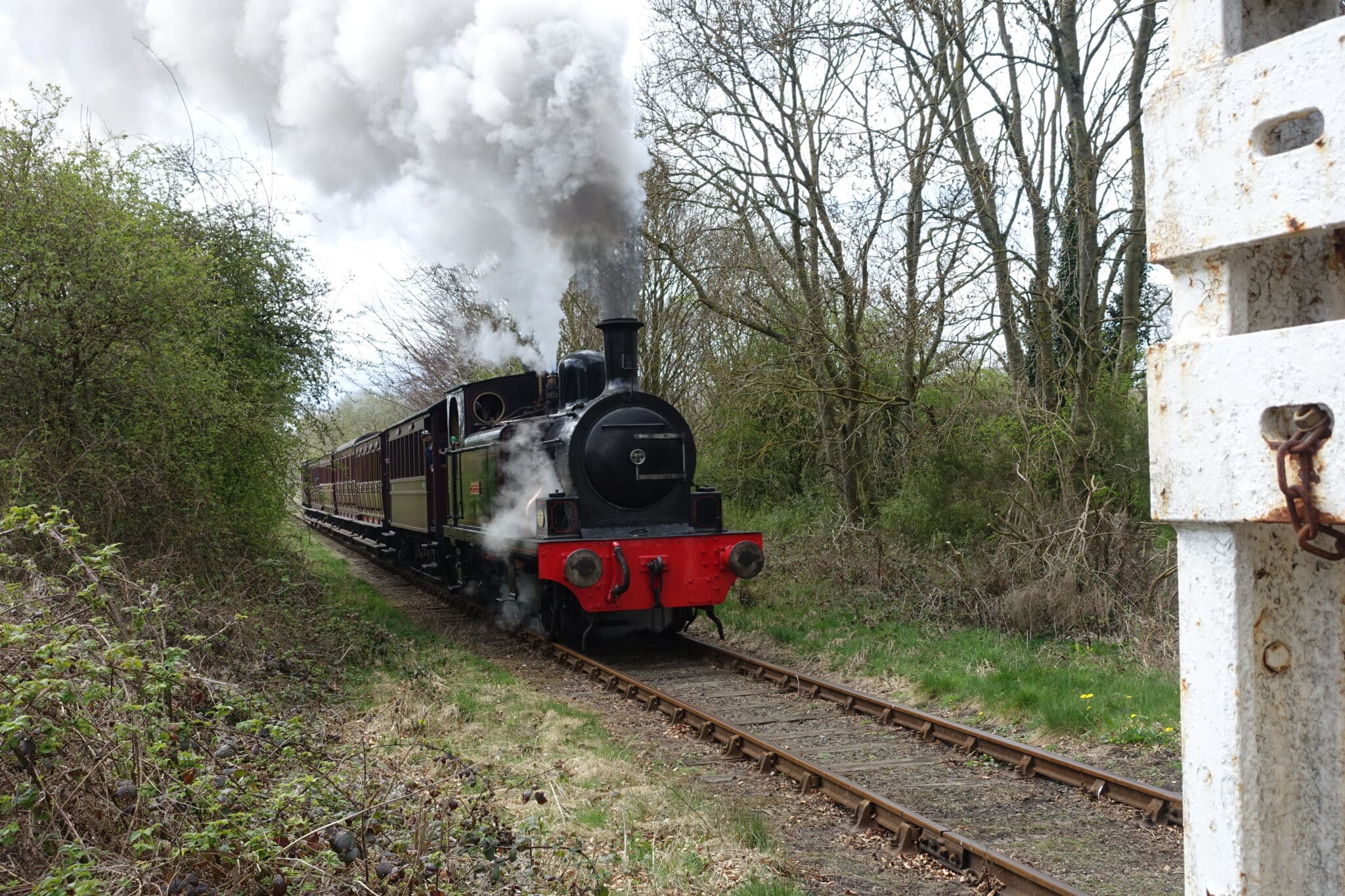
A little later we skirted Beamish Museum. In the distance we spotted some of its preserved and replica locomotives, trams and buses. Some of these were used to transport the museum’s visitors to the different parts of the extensive site. We passed through one of the site’s reconstructed farms, where some very happy pigs were enthusiastically grazing. Beyond there we climbed steadily though fields and, away now from the museum, we crossed the Tanfield Railway, just as one of its trains was approaching.
While the nearby Stockton & Darlington railway celebrates its 200th anniversary in 2025, the Tanfield Railway started running horse-drawn trains in 1725, between the collieries of County Durham and the River Tyne at Gateshead. The railway’s engine shed at nearby Marley Hill is the oldest working shed in the world.
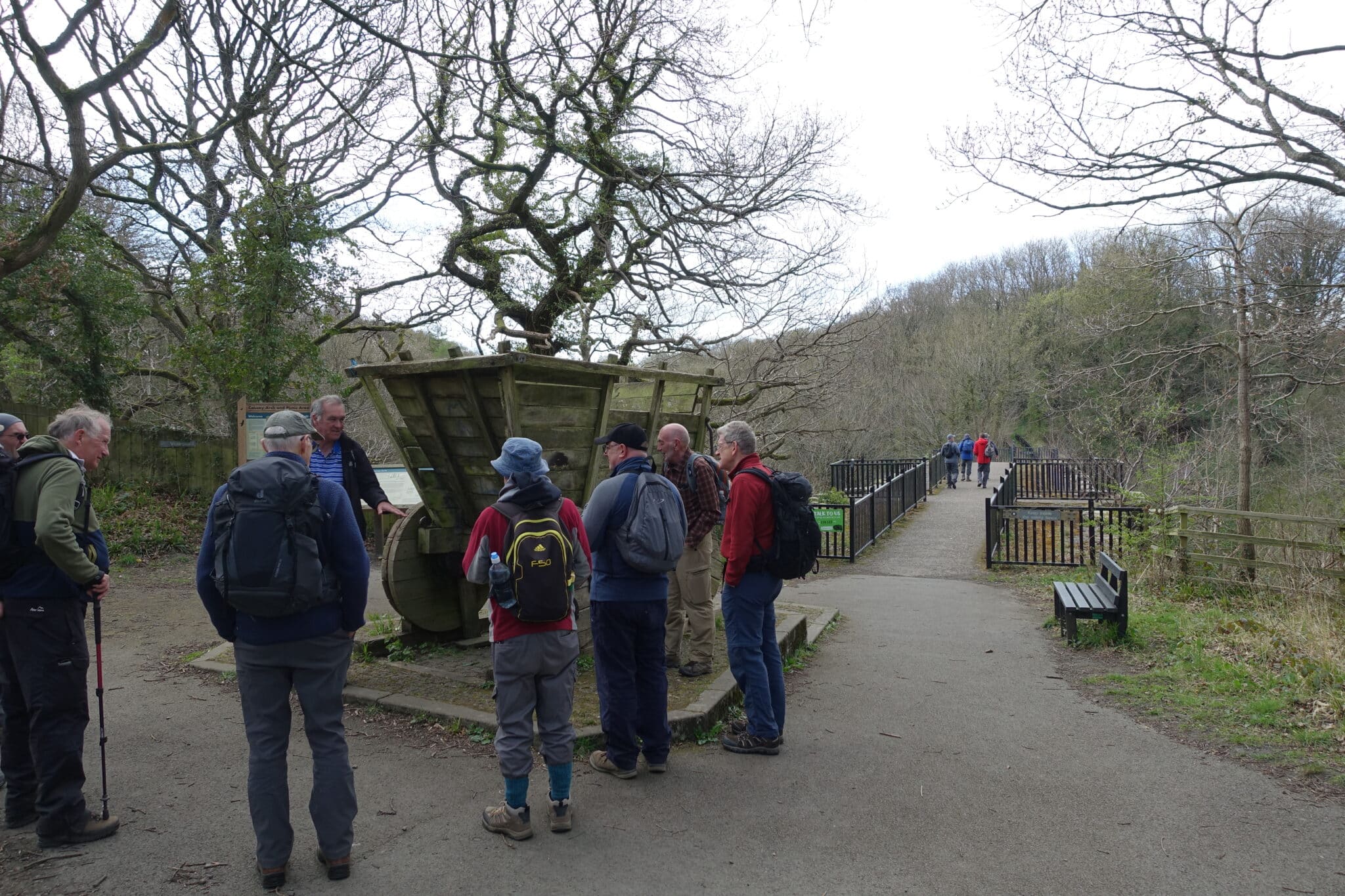
We sat down for our lunchtime sandwiches next to an unexpected gathering of farm tractors and their owners who provided some temporary distraction for a few of our participants. Shortly after we paused to inspect the famous Causey Arch, the oldest railway bridge in the world. While not directly part of the Tanfield Railway, it was built for wooden wagonways in the very early days of coal transport.
We followed the railway for a while through a narrow wooded valley and then climbed through fields back towards Beamish village. The final stretch was along another part of the Stanhope & Tyne footpath, the downhill gradient fine for us walkers but clearly a challenge for the ascending iron-ore trains of the past going in the opposite direction.
Back at our starting point we dispersed, looking forward to our next walk. Thanks to Jan and Neil for planning and facilitating the event, and as always to everyone present for turning up and taking part.